Best Colleges for Computer Science: Top Programs, Rankings, and How to Find Your Fit
Originally published February 2026. Updated April 2026 to expand program coverage and reflect current outcomes data.
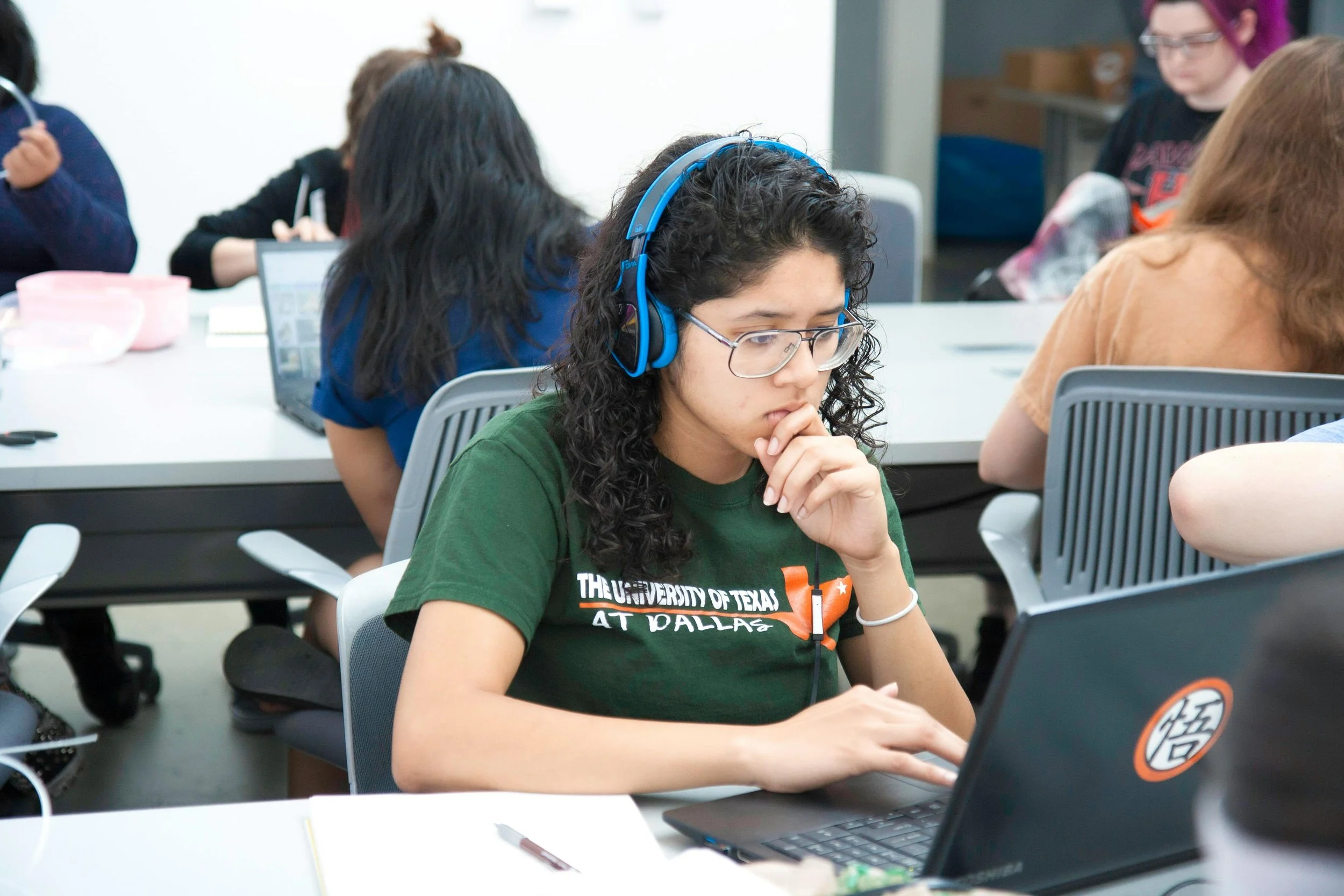
When families begin researching computer science programs, the instinct is to look for a definitive list of the “best” schools. Names like MIT, Stanford, Carnegie Mellon, and Berkeley quickly rise to the top for good reason. These institutions offer rigorous curricula, strong faculty, extraordinary research environments, and exceptional outcomes.
But computer science is offered in different forms across colleges and universities. Two students may both graduate with a degree in computer science yet have had very different experiences with theory, research access, faculty interaction, collaboration, and industry preparation.
This guide examines programs across a range of institutional models — from leading research universities to smaller undergraduate-focused programs — and introduces a framework for evaluating fit that goes beyond what rankings can measure.
Some programs are housed in engineering schools, while others sit within colleges of arts and sciences. Still others are located in stand-alone schools or colleges of computer science. Some are large and research-intensive; others are smaller and undergraduate-focused, often providing more direct faculty mentorship. At certain institutions, competition for access to courses and research opportunities is intense, while at others, students are more readily able to secure seats in courses and participate in research with faculty. At some universities, students are admitted directly into computer science, and changing into the major later can be difficult or impossible. At others, students may freely declare a computer science major after enrollment. Students who are still deciding between engineering and computer science may find it useful to read our guide to how students navigate that decision before exploring the programs below.
Strong undergraduate computer science programs build foundations in algorithms, data structures, systems, discrete mathematics, and computational thinking. They also create environments where students can explore depth areas such as artificial intelligence, systems, cybersecurity, graphics, human–computer interaction, and theory. Access to that depth and the level of support students receive along the way vary widely.
At Lantern, we guide computer science college selection through our Deep-Fit™ admissions approach, asking: In what environment will this student thrive as a computer scientist?
Finding the right environment is only half of the work. Getting in requires its own strategy. Computer science applicants are evaluated within the context of demonstrated technical preparation, academic rigor, and computing engagement. For a detailed overview of how applications are assessed, see our complete guide to computer science admissions, which also discusses how students can write personal statements that reflect intellectual curiosity and creative problem-solving. Families seeking thoughtful, institution-informed guidance can learn more about our college admissions counseling services.
Table of Contents
What Makes a Great Computer Science Program?
The strongest undergraduate programs share several core characteristics.
Strong Theoretical Foundations
At the heart of computer science is theory. Students should gain deep grounding in algorithms, data structures, discrete mathematics, computer systems, and computational complexity. These courses develop the analytical habits of mind that allow students to move beyond tools and languages and understand how computing works at a fundamental level.
In a field where specific technologies evolve quickly, strong theoretical preparation is what allows graduates to adapt, learn new frameworks, and remain technically fluent over time.
Meaningful Depth Pathways
After mastering foundational coursework, students should have access to well-developed depth areas such as artificial intelligence, systems, cybersecurity, graphics, machine learning, theory, human–computer interaction, databases, or programming languages.
Students should not have to compete excessively for core upper-level courses or discover too late that advanced offerings are limited or over-enrolled. The availability of electives, research groups, and specialized tracks often differ meaningfully between large, research-intensive programs and smaller, more teaching-focused departments.
Access to Research and Applied Experience
Strong programs provide multiple pathways for students to apply what they are learning through undergraduate research, internships, co-operative education programs, hackathons, design projects, industry-sponsored collaborations, or open-ended capstone experiences.
Some universities embed research deeply into the undergraduate experience. Others emphasize applied learning through internships, co-operative education programs, and industry partnerships. Both models can be powerful, but students should understand which one they are choosing. In some cases, access to these opportunities may vary even within the same institution, depending on whether a student is enrolled in a school of engineering, a college of arts and sciences, or another academic division.
Departmental Structure and Major Access
Is computer science housed within a school of engineering, a college of arts and sciences, or an independent college of computing? Are students admitted directly to the major, or must they apply after completing prerequisite courses? Are there enrollment caps or GPA thresholds that limit access?
These policies can significantly shape a student’s experience. At many institutions, computer science is one of the most oversubscribed majors on campus. Students may enter undeclared and later compete for limited seats in the major, and even those admitted directly may encounter enrollment constraints in required and advanced courses, which can delay progression through the major. Internal transfer requirements, minimum grade thresholds in foundational courses, and course bottlenecks can all affect academic momentum.
In contrast, some institutions provide a smoother pathway through the major. That stability may stem from admission policies, smaller program size, or lower enrollment pressure. Students benefit when course access and progression through the major are transparent and reliably supported.
For a deeper explanation of how these structural realities intersect with admissions strategy and application positioning, see Navigating the Competitive Landscape of Computer Science Admissions: An Expert’s Approach.
Culture and Collaboration
Because computer science coursework often involves long hours debugging, building, and iterating, peer culture can meaningfully shape the day-to-day student experience. Some departments are highly collaborative, with students working together on problem sets and projects. Others are more competitive, with intense grading curves and high-pressure environments. In collaborative environments, students may more readily share ideas and support one another through difficult coursework.
How Strong CS Programs Differ: Programs Worth Knowing
The programs below illustrate distinct models of undergraduate computer science education, each emphasizing different balances of theory, specialization, research, and applied learning.
Leading Research Universities
Massachusetts Institute of Technology
Theory-driven depth and undergraduate research integration
MIT’s computer science program, housed within its Electrical Engineering and Computer Science (EECS) department, emphasizes deep theoretical grounding paired with substantial hands-on systems experience. Students move quickly into rigorous coursework in algorithms, systems, artificial intelligence, and computation while also engaging in laboratory and project-based work.
A defining feature of MIT is the Undergraduate Research Opportunities Program (UROP), which allows students to participate in research early and often. Undergraduates routinely work alongside faculty and graduate students on advanced problems in AI, robotics, systems, and computational theory.
This model suits students who are mathematically strong, highly self-directed, and comfortable navigating an intellectually intense environment with significant independence.
Carnegie Mellon University
Structured rigor within a standalone computing school
Carnegie Mellon’s School of Computer Science offers one of the most structured and specialized undergraduate CS experiences in the country. As a standalone school dedicated to computing, it provides clearly defined pathways into areas such as machine learning, security, systems, human–computer interaction, and programming languages. The curriculum emphasizes strong foundations in theory, systems, and mathematical reasoning.
The School of Computer Science also participates in BXA Intercollege Degree Programs, which allow students to combine CS with music, art, or drama — an option that is rare at technically focused institutions.
Students are admitted directly to the School of Computer Science, and internal transfer into the school from elsewhere at Carnegie Mellon is rare. This is a commitment to a computing-focused path from day one.
This model works well for students who are clear on their direction and want to commit fully to a computing-centered environment where specialization is available at scale.
Stanford University
Flexibility and interdisciplinary integration
Stanford’s computer science program combines rigorous theoretical preparation with flexibility and cross-disciplinary exploration. After completing a strong foundational core, students choose among tracks such as artificial intelligence, systems, theory, information, and human–computer interaction. The broader campus culture encourages connections across entrepreneurship, design, public policy, and the humanities.
Stanford also offers a coterminal master's program, allowing undergraduates to complete a BS and MS in computer science in approximately five years, a well-established and widely used pathway that adds significant long-term value for students considering graduate study. The d.school — Stanford's well-known design institute — is open to all students and draws CS students who want to integrate human-centered design thinking into their technical work.
This model suits students who want technical rigor combined with the freedom to integrate computing with broader intellectual or entrepreneurial interests.
Northeastern University
Applied learning and co-operative education
Northeastern’s computer science program is distinguished by its long-standing commitment to co-operative education. Students alternate academic study with full-time, paid professional placements, often completing multiple co-op experiences before graduation.
Computer science is housed in Khoury College of Computer Sciences, a standalone college dedicated to computing, and the program's Boston location gives students direct access to a dense technology and biotech ecosystem that amplifies co-op placement options.
Northeastern also operates a global campus network; some students begin at a satellite campus rather than Boston, or complete part of their degree at an international location. Families should factor this into their understanding of the Northeastern experience before applying.
Applied learning is built into the academic structure, allowing students to graduate with substantial industry experience. Alongside rigorous coursework in algorithms, systems, and software design, the co-op model creates an intentional blending of classroom learning and professional immersion.
This model suits students who are motivated by hands-on experience and want structured pathways into industry throughout their undergraduate years.
University of California, Berkeley
Large-scale research depth in two distinct pathways
Berkeley offers CS through two routes: the Electrical Engineering and Computer Science program in the College of Engineering, and a Computer Science degree through Letters and Sciences. The EECS pathway is more selective and emphasizes deeper integration of hardware and software; the Letters and Sciences pathway offers more flexibility in course distribution. Both share access to Berkeley's research infrastructure across AI, systems, security, databases, and networking. The EECS pathway is among the most competitive CS admissions in the country, with admit rates that diverge significantly from Berkeley's overall acceptance rate, and students admitted to either pathway have limited ability to switch between them after enrollment.
The program is large, and students who are proactive about seeking research, internships, and faculty relationships tend to gain the most from the environment. Berkeley's proximity to Silicon Valley and its alumni network make it one of the most industry-connected programs in the country. Students who are less self-directed may find the scale harder to navigate. One practical consideration: upper-division CS courses at Berkeley can be competitive to access even for declared majors, and students should research course availability and enrollment policies before assuming a smooth path through the major.
This model suits students who are academically strong, comfortable with institutional scale, and motivated to take initiative in a dense, self-driven environment with exceptional research and industry proximity.
Georgia Institute of Technology
Applied depth within a standalone college of computing
Georgia Tech's College of Computing offers one of the most structurally distinctive CS programs in the country. Undergraduates choose two "threads" from areas including artificial intelligence (formerly "intelligence"), systems and architecture, theory, media, people, and modeling and simulation, allowing for meaningful customization within a rigorous shared foundation. CS at Georgia Tech is a direct-admit program, and switching into the major after enrollment is not straightforward — students should apply intending to study CS from the start.
The program integrates applied learning throughout, and Georgia Tech's co-op program is well-developed. The growing Atlanta technology ecosystem, alongside national employer relationships, supports strong placement outcomes. Georgia Tech's alumni presence at major technology companies is substantial, and undergraduates who engage early — through research, student organizations, and the alumni network — find pathways to graduate school and elite industry roles. Research opportunities are substantial, particularly in robotics, AI, and cybersecurity. For students seeking deeper research engagement, Georgia Tech offers a formal undergraduate research degree designation requiring nine credit hours of research and a faculty-advised thesis, though access to prominent faculty can be competitive and typically requires demonstrated initiative. As a public institution, Georgia Tech also represents one of the strongest value propositions in CS education, particularly relative to private programs of comparable quality.
The culture is notably collaborative, and entrepreneurship is woven into the curriculum — the junior design project can take the form of building a startup, with funding available through the college. Class sizes can be large, particularly in introductory courses, but the department supports students through teaching assistants, faculty office hours, and a dense technical peer community.
This model suits students who want depth and flexibility within a structured, computing-centered environment, and who are motivated by applied problem-solving alongside theoretical foundations and entrepreneurial opportunity.
University of Illinois Urbana-Champaign
Systems and theoretical depth at research scale
UIUC's CS program, housed in the Grainger College of Engineering, is one of the most research-intensive undergraduate CS programs in the country, with particular strength in systems, programming languages, theory, and algorithms. The department has contributed foundational innovations across the field, and its alumni presence at major technology companies is substantial. Class sizes can be large, but the department supports students through teaching assistants, faculty office hours, and a dense technical peer community. UIUC also offers formally structured CS + X joint degree programs combining computer science with fields such as economics, linguistics, and statistics — an interdisciplinary option that is less common at large engineering-focused programs.
Undergraduates who engage early — through research, student-run technical organizations, and the alumni network — find pathways to graduate school and elite industry roles. Research access is genuine for students who pursue it. One important structural note: CS at UIUC is a direct-admit program within the College of Engineering, and admission is significantly more competitive than UIUC's overall acceptance rate suggests.
This model suits students who are technically strong and self-directed, and who want research-depth access alongside a large, serious technical peer community.
University of Washington, Seattle
Research-intensive, with exceptional strength in HCI, AI, and systems
The Paul G. Allen School of Computer Science and Engineering operates as a standalone school and is particularly recognized for human-computer interaction (HCI), artificial intelligence, and systems — areas where it has produced widely cited research and faculty who have shaped the field. Substantial endowment support from Paul Allen's gift has positioned the school as one of the most well-resourced public CS programs in the country. Both theoretical foundations and applied research receive serious investment.
Seattle's position as a major technology hub — home to Amazon, Microsoft, and a growing constellation of startups — gives Allen School students exceptional internship and research proximity. Faculty connections to industry are close, and students often have access to research that spans academia and industry simultaneously.
This model suits students who want rigorous, research-driven preparation in a program with close ties to major technology employers, particularly in AI, systems, or HCI.
Cornell University
Theoretical depth with flexibility across two colleges
Cornell offers CS through the College of Engineering and through the College of Arts and Sciences, each with different distribution requirements. Both pathways share access to Cornell's faculty in theory, algorithms, AI, programming languages, and systems. The Engineering pathway is more technically concentrated; the Arts and Sciences pathway allows for broader interdisciplinary work.
The program is smaller and more cohesive than Berkeley or UIUC, and the Ithaca environment creates a tightly-knit academic culture. Cornell's alumni network in technology is deep.
This model suits students who value theoretical depth and want the flexibility to situate their CS education within a broader intellectual or interdisciplinary context.
University of Texas at Austin
Research strength anchored in a rapidly expanding technology hub
UT Austin's CS department, housed in the College of Natural Sciences, has particular depth in AI, security, and formal methods. The program is large, research-active, and produces graduates who go on to strong industry roles and doctoral programs. The Turing Scholars honors program offers a more selective, seminar-based CS experience within the larger department. Students apply through the regular UT Austin application and are considered for the program at admission. CS at UT Austin is a direct-admit program, and admission is considerably more competitive than the university's overall acceptance rate indicates.
Austin has emerged as one of the most significant technology hubs in the United States, with major operations from Apple, Dell, Tesla, Oracle, and a growing startup ecosystem. This gives UT Austin CS students unusual proximity to industry for a non-coastal program, with internship access that rivals programs in Seattle or the Bay Area.
This model suits students who want a strong research foundation at a flagship public university, combined with access to a major and rapidly growing technology ecosystem.
University of Michigan
Research depth at flagship scale, with strong industry reach
Michigan's Computer Science and Engineering program, housed in the College of Engineering, is one of the strongest public university CS programs in the country. The department has depth across AI, robotics, systems, and HCI, and the broader engineering culture at Michigan is research-active and well-resourced. Class sizes are large at the introductory level but manageable in upper-division coursework. CS at Michigan is a direct-admit program within the College of Engineering, and admission is considerably more competitive than the university's overall acceptance rate suggests.
Ann Arbor has developed a meaningful technology ecosystem, and Michigan's alumni network in the industry is extensive and well-organized. The university's scale creates real research opportunities for undergraduates who seek them out, and placement outcomes — in both industry and graduate programs — are consistently strong.
This model suits students who want the research resources and alumni depth of a major flagship university, and who are comfortable navigating a large, academically competitive environment.
Princeton University
Theoretical rigor in a small, highly selective environment
Princeton's CS department is known for theoretical depth — algorithms, complexity, and foundations — and has consistently produced graduates with strong technical skills. In CodeSignal's 2026 skills-based ranking, Princeton placed fifth nationally, up from 31st in 2021, a movement that reflects the demonstrated technical preparation of its graduates rather than reputation alone.
The program is smaller and less specialized than CMU or Stanford, and there are fewer formal tracks or concentrations. What it offers instead is close engagement with a faculty that includes some of the most recognized researchers in theoretical computer science, within an institution with an exceptionally strong academic culture overall.
This model suits students who want rigorous theoretical foundations in a small, elite environment, and who are less focused on specialization or industry co-op pathways than on deep preparation for graduate study or research careers.
Strong Undergraduate-Focused Programs
Harvey Mudd College
Small, intensive, undergraduate-focused STEM education
Harvey Mudd offers a highly rigorous computer science experience within a small, STEM-focused liberal arts environment. Classes are small, faculty interaction is direct, and undergraduates are central to the academic mission.
The curriculum emphasizes both theoretical depth and applied problem-solving, and students complete substantial collaborative projects. Because of the institution’s size, research opportunities and faculty mentorship are often more immediately accessible than at larger universities. Through the Claremont Colleges consortium, students also have access to courses across five neighboring institutions, expanding academic breadth well beyond what the college's small size might suggest.
This model suits students who want technical intensity within a tight-knit academic community and who value close faculty relationships alongside rigorous preparation.
Olin College of Engineering
Project-based from the start, with a radically collaborative culture
Olin College, located just outside Boston in Needham, Massachusetts, is one of the smallest engineering colleges in the country, with approximately 350 students across all years. There are no traditional academic departments, and students don’t compete for seats in courses or the major. Students begin working on real engineering problems in their first semester, and the curriculum is organized around design, systems thinking, and collaborative problem-solving throughout.
The learning environment is explicitly non-competitive. The admissions process itself reflects this philosophy: all applicants are required to visit campus and participate in a group collaborative activity as part of their evaluation, a requirement that is almost unheard of at other institutions. Faculty access is immediate, and the community is small enough that students are known individually across the institution.
Through the Olin-Babson-Wellesley consortium, students can cross-register at neighboring institutions, expanding academic options beyond what a 350-student college could offer on its own. For students who learn by building and want close mentorship, it is one of the most distinctive undergraduate engineering environments in the country.
This model suits students who are comfortable with ambiguity and open-ended problems, learn by doing, and thrive in a small, collaborative community rather than a traditional lecture-and-exam environment.
Rose-Hulman Institute of Technology
Undergraduate teaching as the explicit institutional priority
Rose-Hulman in Terre Haute, Indiana, has been ranked the top undergraduate engineering program in the country for teaching quality by U.S. News for more than two decades — not for research output, but for the quality of instruction students actually receive. Class sizes are small, faculty are primarily hired to teach, and accessibility is built into the institutional culture.
The CS program reflects that focus: students work through rigorous technical content in an environment where faculty are consistently present and engaged. Co-ops and internships are available and well-supported. The setting is not a major metropolitan area, but employer relationships and alumni networks compensate for geographic distance from major tech hubs.
This model suits students who learn best through direct faculty engagement and want a technically rigorous education where instruction quality is the explicit institutional priority.
Wellesley College
Liberal arts rigor with cross-registration at MIT and Olin
Wellesley's CS department offers a rigorous theoretical curriculum within a small, teaching-focused liberal arts environment. Classes are small, faculty are accessible, and the undergraduate experience is central to the department's mission. The curriculum builds strong foundations in algorithms, theory of computation, and systems, with opportunities to explore depth areas including AI and data science. As a historically women's college, Wellesley offers a CS environment where women students are the norm rather than the exception — a meaningful distinction in a field where gender imbalance remains pronounced at many institutions.
What sets Wellesley apart is its cross-registration relationship with MIT, which allows Wellesley students to take courses — including advanced CS courses — at one of the top computing programs in the world. Combined with cross-registration at Olin College of Engineering and Babson College, Wellesley students have access to a breadth of technical and interdisciplinary options that is exceptional for a college of its size.
This model suits students who want a rigorous, discussion-based CS education in a small, supportive environment, with the option to extend their technical work into one of the world's leading computing institutions.
Bowdoin College
Flexible, collaborative computing within a small and supportive environment
Bowdoin's CS program has developed steadily into a rigorous option for students who want to combine computing with other intellectual interests. Class sizes are small, the culture is collaborative rather than competitive, and faculty are accessible and engaged. Students have flexibility to integrate computing with fields such as mathematics, cognitive science, or the social sciences.
In 2025, Bowdoin received a $50 million gift to establish the Hastings Initiative for AI and Humanity, funding new faculty hires, expanded research opportunities, and deeper student engagement with artificial intelligence, a significant investment that positions the program for continued growth in one of the field's most important areas.
This model suits students who want a flexible, collaborative computing education in a small, intimate campus environment, with growing strength in AI and the career advantages of a well-supported liberal arts network.
Worcester Polytechnic Institute
Project-based throughout, with structured applied learning from year one
WPI's CS program is defined by the WPI Plan, a project-based curriculum that runs through all four years. Students complete an Interactive Qualifying Project connecting technology to society — many at one of WPI's global project centers, giving the applied learning model an international dimension that is unusual at technical institutions — and a Major Qualifying Project, a year-long capstone equivalent to early-stage professional work. These are requirements, not electives.
The result is a CS education where students graduate having completed substantial applied work alongside their coursework. WPI has strong co-op and internship pathways, and its location in the Boston area provides access to a dense technology ecosystem. Enrollment pressure is lower than at larger research universities, and students generally have reliable access to coursework and advising.
This model suits students who are motivated by applied, project-based learning and want structured pathways to professional experience alongside rigorous technical foundations.
Underrated Programs with Strong Outcomes
Many programs outside the most visible names offer outstanding undergraduate CS experiences. When evaluating them, look for:
Undergraduate-focused teaching cultures, where faculty prioritize instruction and mentorship
Manageable class sizes, allowing for deeper faculty interaction
Reliable course availability, supporting on-time graduation and predictable degree progression
Clear major declaration policies, without restrictive GPA thresholds or enrollment caps
Early access to research or project-based work
Robust internship pathways and industry partnerships, particularly in regions with active tech ecosystems
For a broader discussion of strong engineering and computing programs that are less widely recognized, see our articles on Underrated Engineering Colleges and Small Colleges to Study Engineering.
San Jose State University
Technical outcomes that outperform prestige, in the center of Silicon Valley
San Jose State's CS program sits in the geographic center of the global technology industry, and its graduates perform exceptionally well on independent assessments of technical skill. In CodeSignal's 2026 skills-based ranking — which measures demonstrated programming and software engineering ability across 594 universities and 295,000 assessments, rather than institutional reputation — SJSU ranked second nationally, behind only MIT, up from 49th in 2021.
The program's location in San Jose means that recruiting pipelines to Apple, Google, LinkedIn, Adobe, and dozens of other major employers are direct and well-established. The student body is diverse, and many students combine coursework with work in the industry they are preparing to enter. SJSU operates primarily as a commuter campus, which shapes the social environment differently from residential universities, a practical consideration for families weighing the full undergraduate experience alongside technical preparation.
This model suits students who prioritize technical preparation and industry proximity over institutional prestige, and who want to graduate with demonstrable skills and direct access to the companies that will hire them.
Stony Brook University
Research-depth outcomes at a significantly lower cost
Stony Brook's CS program, part of the State University of New York system, consistently produces graduates with strong technical skills at a cost — particularly for New York residents — that is a fraction of comparable private institutions. In CodeSignal's 2026 skills-based ranking, Stony Brook ranked eleventh nationally, well above many programs with significantly greater name recognition.
The department is research-active, with strength in theory, algorithms, and computational science. Undergraduate students have genuine access to that research environment, and proximity to New York City provides a range of industry and internship opportunities.
This model suits students who want research-level preparation and strong technical outcomes, and for whom value relative to cost is a meaningful part of the decision.
Brandeis University
Strong technical outcomes in a small research university near Boston
Brandeis is a small research university in Waltham, Massachusetts whose CS program ranks in the top tier of CodeSignal's 2026 skills-based assessment of graduate performance. The program is smaller than most on this list, which creates a more accessible environment: class sizes are manageable, faculty are reachable, and students are less likely to encounter the enrollment constraints common at larger programs.
Brandeis's location in the Boston area, near a dense cluster of technology employers and major research universities, makes internships and co-ops readily accessible. The university's liberal arts influences support students who want to situate their CS work within a broader intellectual context.
This model suits students who want strong technical preparation in an intimate research environment, with direct faculty access and the career advantages of the Boston technology ecosystem.
University of Maryland, College Park
East Coast research depth, with unusual proximity to federal and defense technology
Maryland's CS department, part of the College of Computer, Mathematical, and Natural Sciences, is one of the stronger public CS programs on the East Coast and is frequently underestimated relative to its actual quality. The department has particular strength in cybersecurity — a function, in part, of its proximity to NSA, NIST, and a dense cluster of federal agencies and defense contractors in the greater DC corridor. Maryland also offers a dedicated undergraduate cybersecurity major — relatively rare at the bachelor's level — supported by the Maryland Cybersecurity Center, which connects students directly to federal and industry research in the field. CS at Maryland is a limited enrollment program, meaning students apply to the major separately from university admission — an important structural consideration when building a college list.
Research access is genuine, and the program's location gives students internship pathways that don't exist in most other technology ecosystems. In-state cost makes it exceptional value for Maryland residents; out-of-state families should compare it against comparable programs on cost.
This model suits students who want strong research preparation at a public flagship, and who are drawn to cybersecurity, data science, or the particular industry cluster that the DC region supports.
Rensselaer Polytechnic Institute
Strong technical foundations at a focused engineering university
RPI, located in Troy, New York, is one of the oldest technical universities in the country, and its CS program benefits from that heritage: a serious technical culture, small enough that students are not anonymous, with co-op and project pathways that support hands-on preparation. Admission is less competitive than at the most selective programs, making it an accessible option for students who want a rigorous technical education in a focused environment.
The Troy/Albany setting is not a major technology hub, but New York City is accessible, and RPI's alumni network, built over more than a century in engineering and computing, is engaged and regionally strong.
This model suits students who want a technically serious, focused engineering education at a school where they will have more individual access than at larger research universities, without the price tag of the most selective technical institutions.
Purdue University
Rigorous CS at a flagship engineering university, with more accessible admission than its quality suggests
Purdue's CS program, housed in the College of Science, sits within one of the strongest engineering universities in the country. The department has depth in systems, AI, and software engineering, and students benefit from Purdue's broad technical culture and well-developed industry relationships — particularly with major employers in technology, defense, and manufacturing. Class sizes are large at the introductory level, but upper-division coursework is more manageable, and the program supports students through structured advising and a dense technical peer community.
Admission is less selective than at the most competitive programs on this list, making Purdue a realistic option for strong students who want a rigorous CS education within a serious engineering environment without the admissions pressure of the top-ranked programs. In-state cost is low, and out-of-state tuition is competitive relative to comparable programs at other flagship universities.
West Lafayette is not a major technology hub, but Purdue's recruiting pipeline to national employers is strong, and the alumni network is large and well-organized across the industries the program serves.
This model suits students who want a rigorous, engineering-culture CS education at an accessible and affordable flagship university, with strong employer relationships and a serious technical peer community.
Tufts University
Professionally oriented CS with flexibility, at the center of the Boston ecosystem
Tufts offers CS through both the School of Engineering and the School of Arts and Sciences, and students in either school have meaningful flexibility to engage with curriculum across both. The program is mid-sized — large enough to have real depth, small enough that students are not competing for faculty attention or course seats the way they might at larger research universities.
Engineering students have access to co-op and capstone experiences, and the university has made professional readiness an institutional priority — from dedicated career services leadership to a new professional readiness requirement embedded in the engineering curriculum and active development of industry partnerships for experiential learning. Beginning in fall 2026, the CS department is introducing two new undergraduate AI minors — one focused on AI development and one on applied AI — available to students across both schools. The Boston location provides internship and research access to one of the most concentrated technology and biotech ecosystems in the country.
This model suits students who want a strong, undergraduate-focused CS education in an intellectually open, collaborative environment, with growing infrastructure for professional preparation and the career advantages of the Boston area.
Ready to think about how to apply to CS programs, not just which ones to consider? Our complete guide to computer science admissions walks through how admissions committees evaluate CS applicants, how to build a balanced college list, and how to position your application effectively.
How to Know Whether a Computer Science Program Is Right for You
The right computer science program is the one aligned with how a student learns, works, and grows.
Using the Deep-Fit™ admissions approach, we encourage families to evaluate programs across four dimensions.
Academic Fit
Students should first understand where computer science is situated within the institution. At a university, is the program housed in a school of engineering, a college of arts and sciences, or a standalone college of computing?
It is essential to examine both the requirements for the major and the requirements for the degree as a whole. Engineering-based programs may require additional mathematics, science, or technical coursework beyond the major itself. Programs housed within arts and sciences may include distribution requirements across the humanities, social sciences, or foreign languages. These institutional expectations shape how much room a student has to achieve other academic goals such as exploration beyond computing, interdisciplinary study, or study abroad.
Students should also look closely at how the major is structured. What are its requirements? How early do students begin core computer science coursework? Is the curriculum tightly sequenced, or is there flexibility in pacing? Are there clearly defined tracks or concentration areas, and how accessible are they?
Programs also differ in instructional emphasis. Some lean heavily toward theory, with significant focus on algorithms, proofs, and mathematical rigor. Others integrate project-based learning, systems implementation, and applied software development throughout the curriculum. Most offer a balance, but the relative emphasis shapes how students experience the field and develop as problem-solvers.
Finally, are students admitted directly into the major, or is there a competitive application or review process after the first year? Are required and advanced courses reliably available each semester? Enrollment constraints, internal transfer policies, and course sequencing can all affect a student’s progression through the major.
Academic fit is about whether the degree requirements, major structure, curricular design, and instructional philosophy align with how a student learns and wants to grow as a computer scientist.
Personal Values Fit
Will the student thrive in a highly independent environment, or do they benefit from more structured guidance and advising?
Some programs assume students will proactively seek research, internships, and faculty mentorship. Others build those pathways more intentionally into the undergraduate experience.
Computer science as a discipline requires persistence, comfort with ambiguity, and a willingness to iterate through failure. Some departments explicitly cultivate this growth mindset, encouraging experimentation and intellectual risk-taking.
Students should consider which environment aligns with their temperament and values. Do they prefer clearly defined milestones and expectations, or do they flourish when given freedom to explore and build independently? Do they perform best in fast-paced, high-intensity environments, or in settings that allow for more deliberate and steady intellectual development?
Students should also consider whether they see peers and mentors with similar backgrounds and learning styles succeeding within the program, as they are more likely to thrive in such environments.
Social Fit
The social environment within a computer science department can meaningfully influence how students experience their academics.
In some programs, collaboration is the norm, and students routinely work together on problem sets, projects, and research. Others are more competitive. Where is a student most likely to remain motivated and confident?
Prospective students benefit from observing how peers interact and from speaking directly with current students. Do students form study groups? Are faculty approachable? Do upper-level students mentor younger ones? Conversations with enrolled students often provide the clearest insight into the daily realities of a department. Faculty and staff can frequently connect prospective students with current undergraduates, and alumni networks may also offer valuable perspective. These discussions often reveal aspects of departmental culture that are not visible on a website or in an information session.
Practical Fit
Students should examine how academic preparation translates into real-world experience. Are internships, co-operative education programs, or research placements integrated into the curriculum, or must students pursue them independently? At what stage do students typically gain access to these opportunities?
Institutional context also matters. Does the university’s location provide access to active technology ecosystems? Are career services closely integrated with the computer science department? How intentionally does the department support professional development through advising, industry partnerships, or structured internship pathways? Are alumni networks engaged and accessible to undergraduates?
Finally, families should consider long-term sustainability. Affordability over four years, reliable access to required courses, and academic support services all influence outcomes, including whether a student can realistically complete the degree in four years. At programs with enrollment pressure, bottlenecks in required coursework can extend time to graduation in ways families don't anticipate.
Bringing the Four Dimensions Together
Selecting a computer science program requires looking beyond rankings and reputation. The right fit depends on alignment across four dimensions of fit:
Academic — how the major is designed and accessed
Personal values — how computing is practiced and supported
Social — how students collaborate and compete
Practical — whether professional opportunity and structural stability are sustained over time
When these elements align, students are far more likely to thrive — not only in coursework, but in research, internships, and long-term career growth.
In computer science, where expectations are high and the field evolves rapidly, fit is not a soft concept. It is a strategic decision that shapes both undergraduate experience and future opportunity.
Frequently Asked Questions About Computer Science Colleges
What colleges have the best computer science programs?
Programs consistently recognized for undergraduate CS strength include MIT, Carnegie Mellon, Stanford, UC Berkeley, Georgia Tech, Cornell, UIUC, Northeastern, and the University of Washington, among others. Each offers a distinct model — research-intensive, applied/co-op, or interdisciplinary — and the right choice depends on how a student learns and which environment will cultivate their best work. Skills-based assessments of CS graduates also show strong performance from programs that don't appear in traditional rankings. The programs section above covers both well-known and underrated options, and the How to Know Whether a CS Program Is Right for You section walks through how to evaluate fit across four dimensions.
Is a computer science degree still worth it?
Computer science remains one of the most rigorous and versatile undergraduate majors. Students who build deep foundations in algorithms, systems, and mathematical reasoning, and who engage meaningfully in research, internships, or substantive technical projects, develop durable skills that translate across industries and evolving technologies.
The more important question is not whether the degree is “worth it,” but whether the student is genuinely energized by computational thinking, sustained problem-solving, and technical depth. For a broader analysis of how the field is evolving and what that means for today’s students, see Is a Computer Science Degree Still Worth It in 2026?
Is ABET accreditation important for computer science?
Some highly respected computer science departments are ABET-accredited; others are not.
Generally, the strength of the curriculum, faculty, research opportunities, and institutional reputation carry greater weight than accreditation status.
For a deeper explanation of how ABET accreditation functions across engineering and computing disciplines, see our guide to understanding the value of ABET accreditation.
Should I major in computer science or artificial intelligence?
Only a limited number of institutions offer standalone undergraduate AI majors. Students interested in artificial intelligence may be well served by a strong computer science degree with carefully selected upper-level coursework in machine learning, robotics, data systems, and related fields.
In many cases, the distinction matters less than the specific courses a student takes and how deeply they engage within the discipline. For a detailed breakdown of undergraduate AI pathways and how they differ from traditional CS programs, see Artificial Intelligence (AI) as an Undergraduate Major: What You Need to Know.
What are some underrated CS programs worth considering?
Several programs produce technically strong graduates despite receiving less attention than the most prominent names. On the skills-based side, CodeSignal's 2026 ranking — which measures demonstrated programming ability rather than reputation — places San Jose State second nationally and Stony Brook eleventh, both well above what their prestige would suggest. Brandeis also places in the top tier of that assessment. Tufts, RPI, and the University of Maryland are strong programs that are frequently overlooked relative to their actual quality, particularly for students focused on the Boston and DC/Mid-Atlantic ecosystems respectively. Purdue is also worth consideration for strong students who want a rigorous CS education at a relatively accessible flagship with solid employer relationships, particularly in technology, defense, and manufacturing.
Students drawn to smaller, teaching-intensive programs rather than research universities will find strong options in the undergraduate-focused tier above — particularly Olin, WPI, and Rose-Hulman, each of which prioritizes instruction and applied learning over research output. The underrated programs section covers all of these in more detail.
Computer science programs may appear similar on the surface, but the undergraduate experience can differ dramatically from one institution to another.
The strongest outcomes emerge when students choose environments that match how they think, learn, and engage with technical work. Rankings may open the conversation, but fit determines long-term success.
Choosing among CS programs requires understanding how they actually work. Jennifer Stephan holds a PhD in Electrical and Computer Engineering, was a CS professor for fourteen years, and has spent a decade as a Dean of Engineering advising CS students through exactly these decisions. She counsels a limited number of CS applicants each year.